
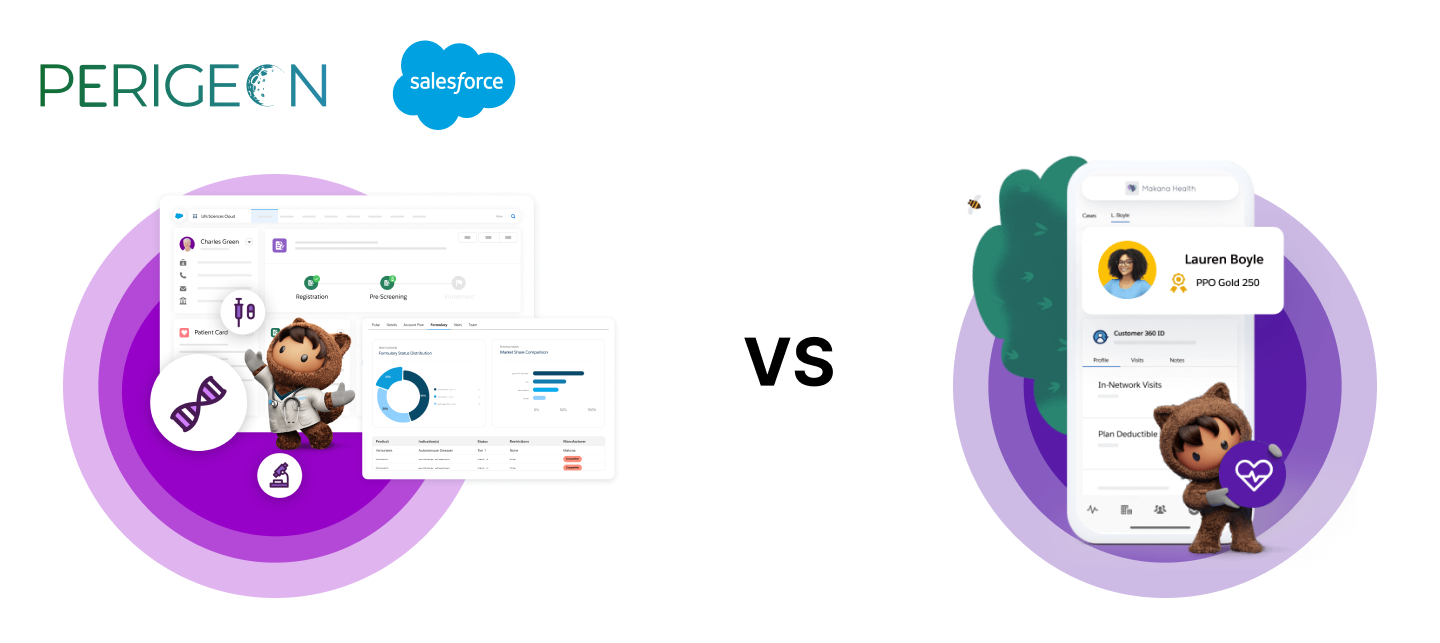
Key Differences Between Salesforce Life Sciences Cloud and Health Cloud
| Feature/Use Case | Salesforce Health Cloud | Salesforce Life Sciences Cloud |
|---|---|---|
| Primary Focus | Patient engagement and care management | Supporting life sciences operations, including clinical trials and compliance |
| Ideal Users | Healthcare providers, payers, and care coordinators | Pharmaceutical, biotech, and medical device companies |
| Use Cases | Patient care coordination, appointment scheduling, health tracking | Clinical trial management, regulatory compliance, and product launches |
| Data Management | Electronic health records (EHR) integration for real-time patient insights | Study and trial data management for research and development |
| Compliance | HIPAA-compliant platform for patient data protection | Designed for industry-specific regulations like GxP and FDA requirements |
| Features | Personalized care plans, patient communities, telehealth capabilities | Investigator portals, trial management tools, and global compliance tracking |
| Target Outcomes | Improved patient outcomes and streamlined care delivery | Accelerated time-to-market for therapies and enhanced R&D processes |
Use Cases: Salesforce Health Cloud
1. Patient Engagement and Care Management
Healthcare providers use Salesforce Health Cloud to manage patient journeys, coordinate care teams, and personalize care plans. With Salesforce Health Cloud implementation services, organizations can streamline patient engagement, improve care coordination, and create connected healthcare experiences through centralized patient data and automated workflows.
2. Appointment and Scheduling Optimization
Payers and providers can streamline appointment bookings and resource management.
3. Telehealth Integration
Enhance remote care services with integrated telehealth tools, making healthcare more accessible.
4. Chronic Disease Management
Track patient progress, medication adherence, and health milestones in real-time.
Use Cases: Salesforce Life Sciences Cloud
1. Clinical Trial Management
Pharmaceutical, biotech, and medical device companies use Salesforce Life Sciences Cloud to manage clinical trial operations, coordinate research stakeholders, and streamline interactions throughout the product development lifecycle. Implementing Salesforce Life Sciences Cloud solutions helps organizations improve operational visibility, manage complex processes, and support collaboration across clinical research teams.
2. Regulatory Compliance
Ensure compliance with global regulations and standards, simplifying audits and approvals.
3. Product Launch Support
Coordinate marketing, compliance, and logistics for new product launches with unified tools.
4. Investigator Collaboration
Enable seamless communication and data sharing with investigators during research studies.
Which One Is Right for You?
- Choose Salesforce Health Cloud if you’re focused on improving patient care, streamlining provider-payer coordination, and enhancing engagement.
- Opt for Salesforce Life Sciences Cloud if you’re in the pharmaceutical, biotech, or medical device sector and need support for R&D, clinical trials, and compliance.
How Perigeon Can Help
At Perigeon, we help healthcare and life sciences organizations implement and optimize Salesforce solutions according to their business requirements. Our Salesforce implementation services cover CRM configuration, workflow automation, data management, and platform customization to support industry-specific operations. Whether you are adopting Health Cloud to improve patient engagement or Life Sciences Cloud to streamline research and clinical operations, our team helps align Salesforce capabilities with your organizational goals.
Conclusion
Salesforce Health Cloud and Life Sciences Cloud offer transformative tools for their respective industries. By understanding their differences and aligning them with your goals, you can select the solution that propels your organization forward.
Ready to implement Salesforce? Contact Perigeon today!