


Introduction
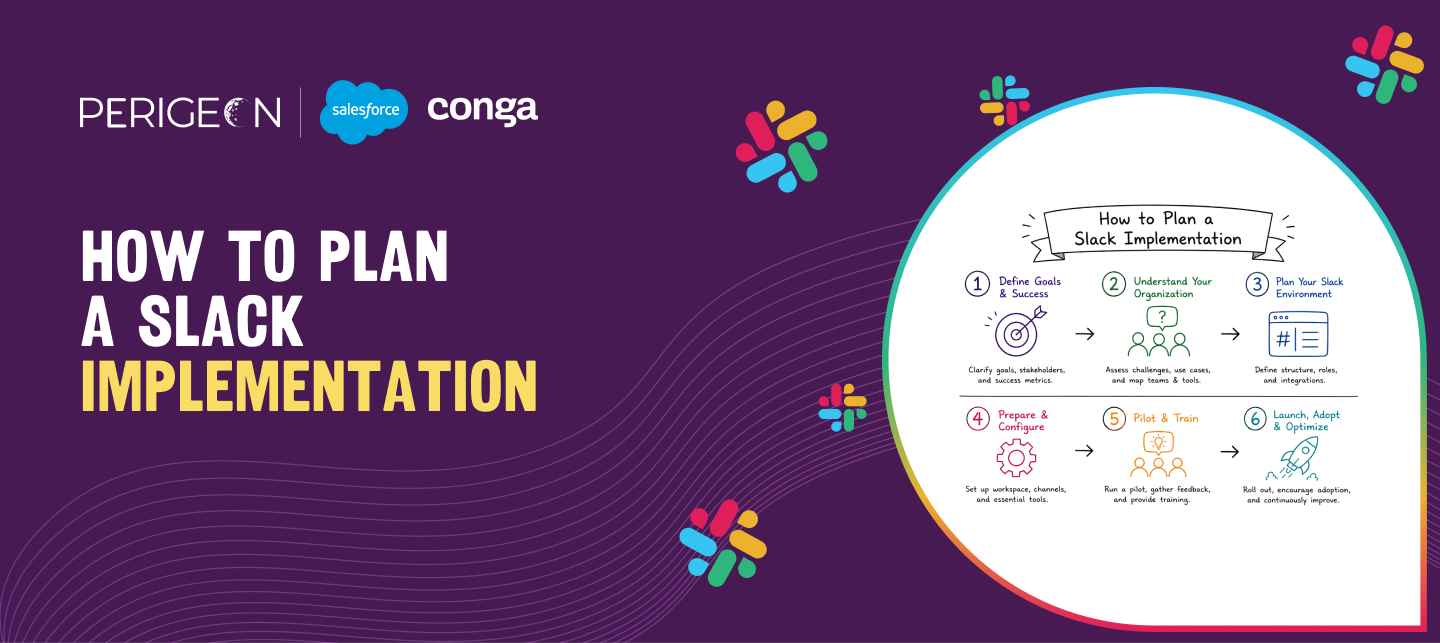
Implementing Slack is often seen as a simple setup task—create a workspace, add users, and start chatting. However, successful organizations know that a Slack implementation is a strategic rollout, not just a tool deployment.
Without proper planning, Slack can quickly become messy, underutilized, or fragmented. But when implemented correctly, it becomes a powerful hub for communication, automation, and business operations.
we help organizations design and execute structured Slack implementations that improve collaboration, integrate with Salesforce, and drive long-term productivity.
Key Takeaways
- Slack implementation requires strategy, not just setup
- A structured workspace improves adoption and reduces confusion
- Governance and security are essential from day one
- Integrations like Salesforce significantly increase Slack value
- Automation improves efficiency and reduces manual work
- Adoption planning is critical for long-term success
Why Slack Implementation Needs Planning
Many organizations fail to get full value from Slack because they skip planning and governance. The result is:
- Too many unnecessary channels
- Low user engagement
- Poor information structure
- Lack of integration with business tools
- No clear ownership or rules
A structured implementation ensures Slack becomes a business operating system, not just a chat tool.
Step 1: Define Business Objectives
Before setting up Slack, identify what you want to achieve:
- Improve internal communication
- Speed up sales collaboration
- Enhance customer support response time
- Automate business workflows
- Improve visibility across teams
Clear goals help shape your Slack architecture and adoption strategy.
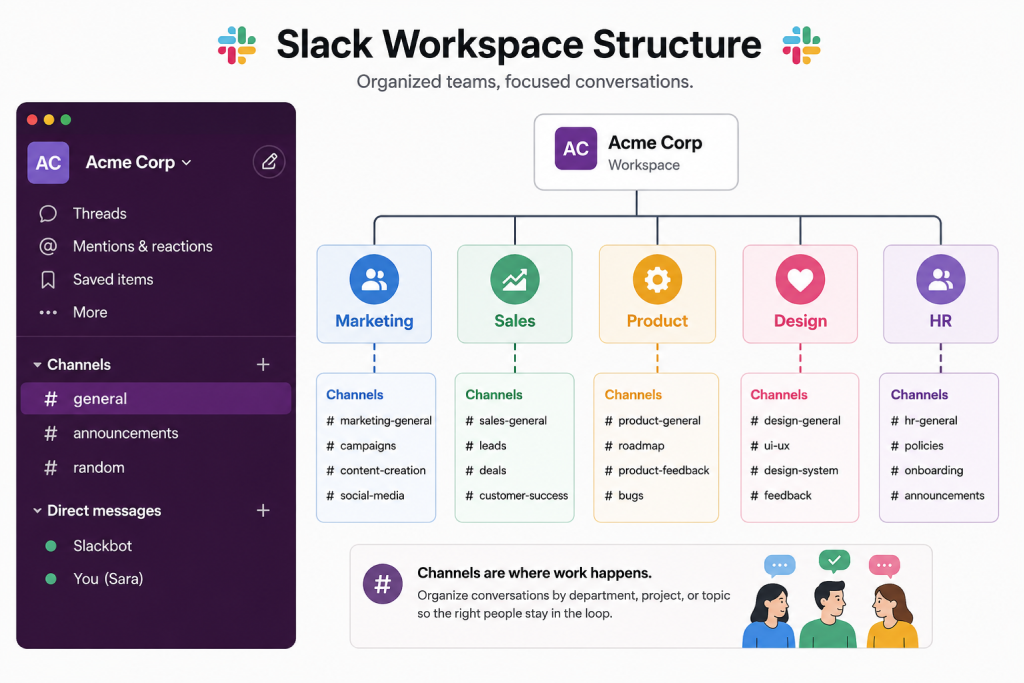
Step 2: Design Your Workspace Structure
A well-planned Slack workspace prevents chaos later.
Best practices include:
- Organizing channels by departments (Sales, Marketing, Support, IT)
- Creating project-based channels
- Defining naming conventions (e.g.,
#sales-opportunities,#support-escalations) - Limiting unnecessary channel creation
Step 3: Establish Governance and Security Rules
Governance ensures Slack remains secure and manageable.
Define:
- Channel creation permissions
- Guest access policies
- Data retention rules
- Compliance requirements
- Communication guidelines
Without governance, Slack becomes difficult to scale in larger organizations.
Step 4: Integrate Key Business Applications
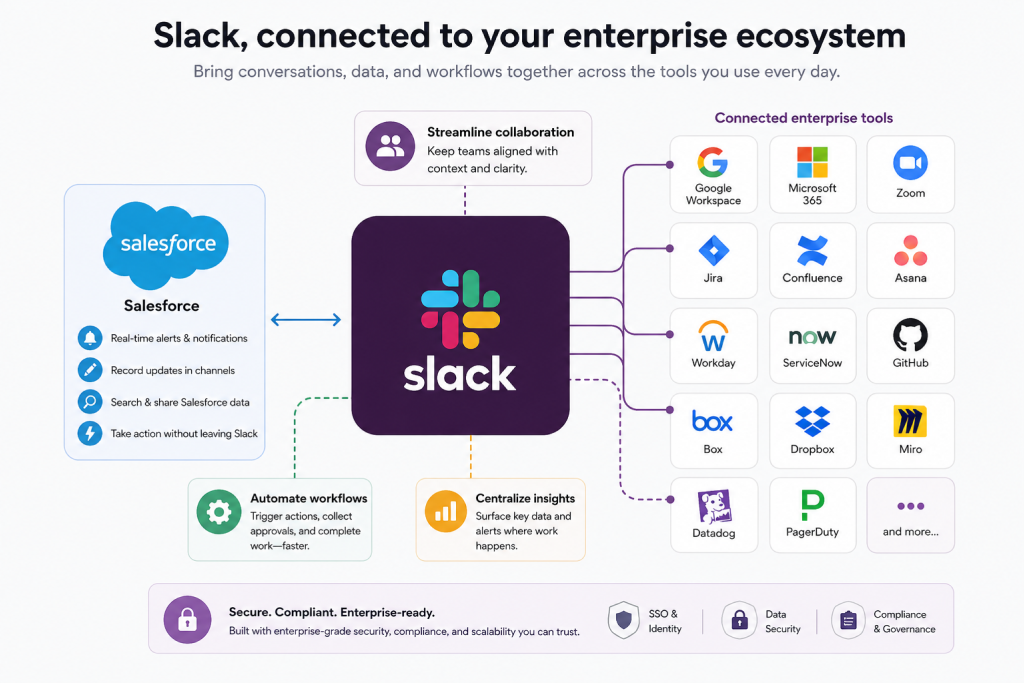
Slack becomes significantly more powerful when connected to your business ecosystem.
Common integrations include:
- Salesforce (CRM)
- Google Workspace
- Microsoft 365
- Jira
- ServiceNow
Salesforce Slack Integration: A Game Changer
One of the most impactful integrations is Salesforce and Slack.
With Salesforce Slack integration, teams can:
- View CRM records directly inside Slack
- Receive real-time alerts on leads and opportunities
- Collaborate on customer accounts in dedicated channels
- Update deal status without switching platforms
- Improve sales and service response times
This integration eliminates the need to constantly switch between tools and ensures teams stay aligned with customer data in real time.
At Perigeon, we provide Salesforce Slack integration services that help businesses connect CRM workflows directly into Slack for faster decision-making.
Step 5: Build Workflow Automation
Slack workflows help reduce manual tasks and improve efficiency.
Examples include:
- Employee onboarding automation
- IT support ticket routing
- Lead assignment notifications
- Approval requests (HR, finance, procurement)
- Daily status updates
Automation ensures consistency and saves time across teams.
Step 6: Drive User Adoption
Even the best Slack setup fails without adoption.
To improve engagement:
- Conduct employee training sessions
- Appoint Slack champions in each department
- Provide usage guidelines and templates
- Share best practices regularly
- Encourage feedback from users
Step 7: Measure and Optimize Slack Usage
After rollout, track performance metrics such as:
- Active users
- Message engagement
- Workflow usage
- Channel activity
- Response times
Use insights to continuously improve your Slack environment.
Conclusion
A successful Slack implementation is not just about launching a tool—it is about designing a connected digital workspace. With the right planning, governance, automation, and integrations, Slack becomes a powerful platform that drives collaboration and business efficiency.
Organizations that take implementation seriously see higher adoption, better communication, and improved operational performance.