

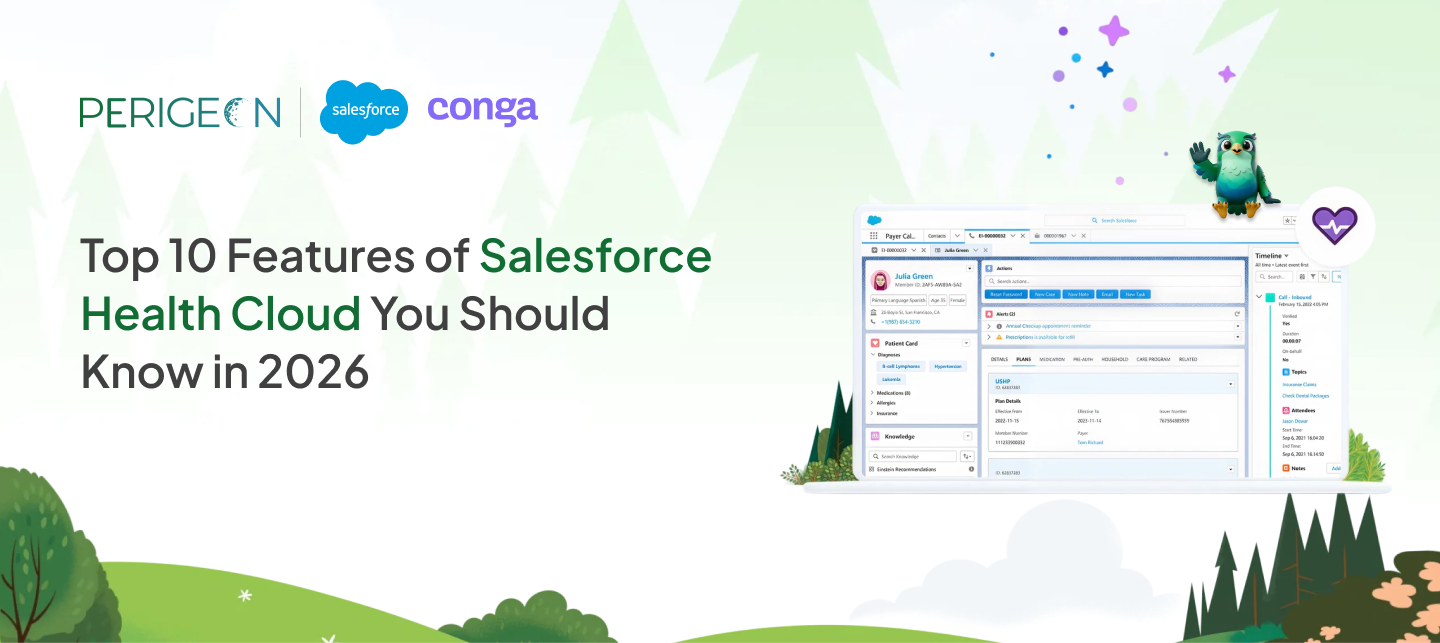
The healthcare industry in 2026 faces mounting pressure: rising costs, staff burnout, complex regulations, and patients who expect seamless digital experiences. Salesforce Health Cloud has evolved into a true AI-first platform that addresses these challenges head-on.
With the Spring ’26 release, Health Cloud now deeply integrated with Agentforce, stands out as one of the most powerful tools for providers, payers, and public health organizations. It unifies clinical and non-clinical data, automates routine tasks, and enables proactive, personalized care at scale.
In this guide, we explore the must-know features of Salesforce Health Cloud in 2026 and how they can transform your organization.
What Is Salesforce Health Cloud?
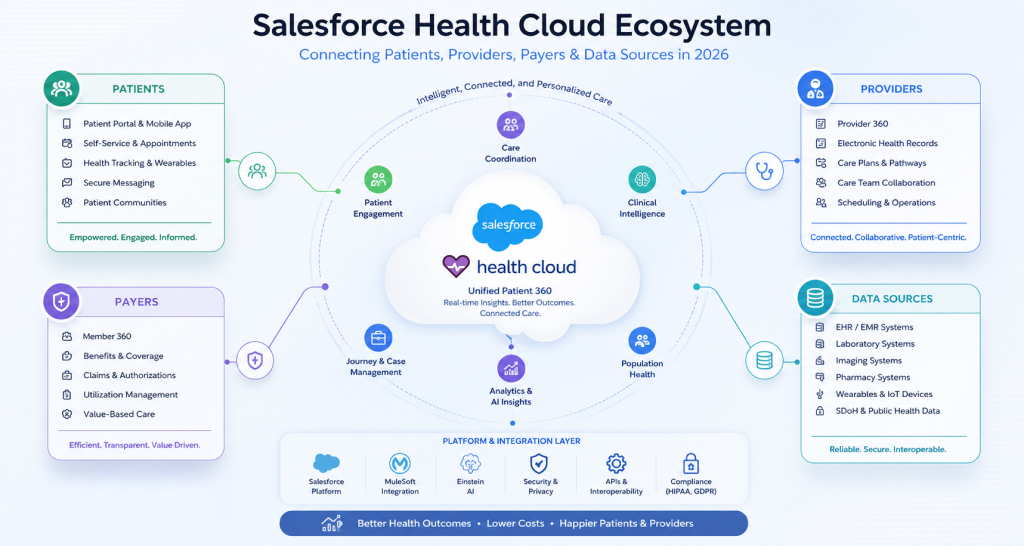
Salesforce Health Cloud is a healthcare-focused CRM platform designed to help organizations create connected patient experiences across every touchpoint. It extends the core Salesforce platform with healthcare-specific capabilities, making it one of the most effective Salesforce solutions for healthcare providers, payers, and public health organizations looking to improve patient engagement and operational efficiency.
At its core, Health Cloud delivers five major pillars:
- Unified patient data and 360-degree profile management
- AI-powered clinical and administrative workflows via Agentforce
- Interoperability with EHR/EMR systems through FHIR APIs
- Care coordination and population health management
- HIPAA-ready security, compliance, and consent management
Who Should Use Salesforce Health Cloud?
Health Cloud is purpose-built for healthcare organizations of all types. Here is how different stakeholders benefit:
- Hospitals and health systems: Manage patient relationships, coordinate care teams, reduce administrative burden, and improve patient experience across facilities.
- Insurance payers: Automate benefits verification, manage member journeys, streamline prior authorizations, and improve utilization management.
- Public health organizations: Run population health programs, manage community outreach, and track social determinants of health at scale.
- Specialty clinics and post-acute care providers: Coordinate home health visits, manage chronic disease programs, and monitor remote patients effectively.
If your organization manages complex patient or member relationships and wants to replace fragmented systems with a unified, AI-ready platform, Health Cloud is worth evaluating.
Latest Salesforce Health Cloud Features in 2026
1. Agentforce AI for Healthcare
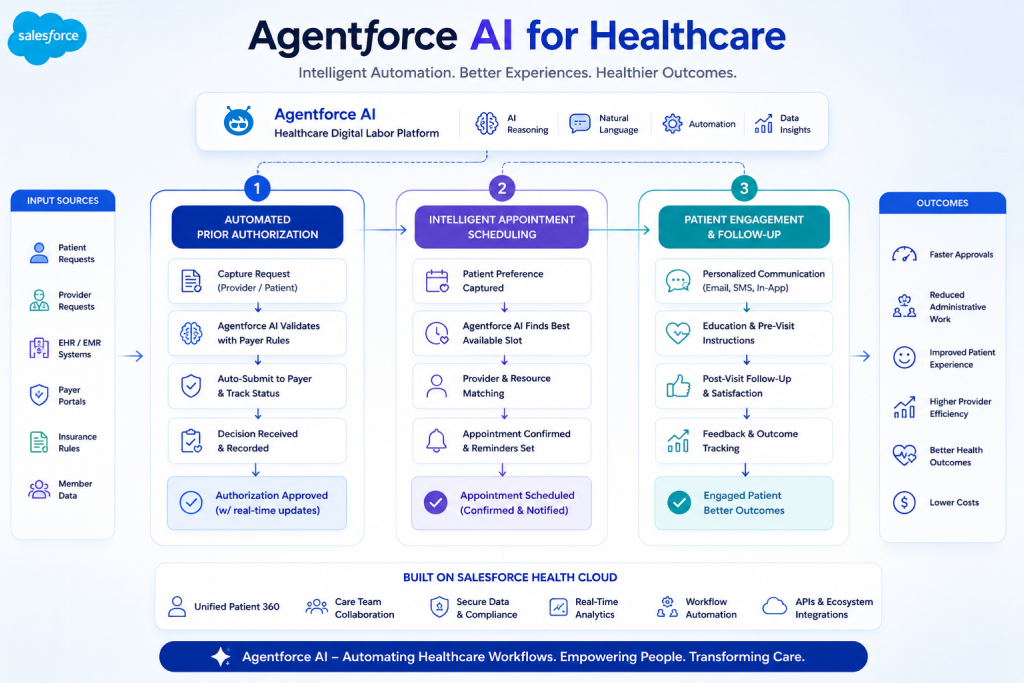
One of the biggest innovations in the latest Salesforce Health Cloud releases is Agentforce for Health, an AI-powered digital workforce designed specifically for healthcare organizations. This feature helps providers and payers automate repetitive administrative tasks while improving patient engagement and accelerating healthcare operations. Many organizations leverage Salesforce Agentforce Consulting services to successfully implement and optimize these AI-driven capabilities.
Healthcare organizations spend significant time handling manual activities such as appointment coordination, prior authorizations, patient inquiries, benefits verification, and care navigation. Agentforce AI reduces this burden by using autonomous AI agents that can understand healthcare workflows and respond intelligently in real time.
Key Capabilities
- AI-powered patient and member assistance
- Automated benefits verification
- Intelligent care coordination
- Prior authorization acceleration
- Clinical trial matching support
- Conversational healthcare AI workflows
- Automated healthcare case resolution
Benefits
- Reduces administrative workload for healthcare staff
- Speeds up treatment approvals
- Improves patient satisfaction and engagement
- Enhances operational productivity
- Supports scalable healthcare automation
2. Unified Patient 360 Profile
The enhanced Patient 360 Profile gives healthcare professionals a complete and centralized view of each patient by consolidating information from multiple healthcare systems into one interface. This feature is becoming increasingly important as healthcare organizations work toward delivering personalized and connected care experiences.
The latest Health Cloud updates allow real-time synchronization of patient information across EHRs, claims systems, wearable devices, care plans, and social determinants of health data sources. Healthcare teams can now make faster and more informed decisions because all patient interactions and medical history are accessible in one place.
Included Data Sources
- Electronic health records (EHR/EMR)
- Insurance claims information
- Demographic and household data
- Behavioral health records
- Medication and prescription history
- Wearable and IoT device data
- Social determinants of health
Latest Enhancements
- Real-time profile updates
- AI-generated patient insights
- Predictive risk scoring
- Care gap identification
- Improved patient timeline visualization
Benefits
- Better care coordination
- Faster clinical decision-making
- Personalized patient engagement
- Reduced data silos across departments
3. Data Cloud Integration for Healthcare
Salesforce has significantly strengthened the integration between Health Cloud and Salesforce Data Cloud, allowing healthcare organizations to unify massive volumes of patient and operational data in real time.
Modern healthcare systems generate data from multiple disconnected platforms, making it difficult to create consistent patient experiences. Data Cloud solves this problem by combining structured and unstructured healthcare data into a single trusted platform that supports AI-driven healthcare operations.
Key Features
- Real-time healthcare data unification
- Patient identity resolution
- Large-scale healthcare analytics
- AI-ready healthcare datasets
- Personalized engagement journeys
- Cross-platform healthcare reporting
Benefits
- Improved population health management
- Better patient segmentation
- Faster analytics and reporting
- Enhanced AI prediction accuracy
- More personalized healthcare experiences
4. Intelligent Appointment Management
Healthcare scheduling is often complex due to provider availability, patient preferences, specialty coordination, and resource management requirements. Salesforce Health Cloud now includes intelligent appointment management capabilities powered by automation and AI.
Patients can schedule, modify, or cancel appointments through self-service portals while providers gain access to optimized scheduling recommendations that reduce operational inefficiencies and improve patient access to care.
Features
- Self-service patient scheduling
- Appointment reminders and notifications
- AI-assisted scheduling recommendations
- Waitlist management
- Multi-provider appointment coordination
- Automated cancellation workflows
Benefits
- Reduces patient wait times
- Minimizes no-show rates
- Improves healthcare resource utilization
- Enhances patient convenience
- Streamlines front-desk operations
5. Advanced Interoperability with FHIR APIs
Interoperability is one of the most important priorities in digital healthcare transformation. Salesforce Health Cloud now provides enhanced support for healthcare interoperability standards such as FHIR (Fast Healthcare Interoperability Resources) and HL7.
This feature allows healthcare providers, insurance companies, and healthcare ecosystems to exchange patient information securely across systems in real time without creating data silos.
Latest Improvements
- FHIR-compliant APIs
- Bidirectional healthcare data synchronization
- Real-time EMR integration
- Low-code healthcare connectors
- API-based healthcare ecosystem integration
Supported Integrations
- Epic
- Cerner
- Athenahealth
- Insurance platforms
- Third-party healthcare applications
Benefits
- Faster access to patient records
- Better collaboration across providers
- Improved continuity of care
- Reduced duplicate data entry
- More accurate healthcare data exchange
6. Care Management Enhancements
The latest Health Cloud releases include advanced care management tools that help healthcare organizations create personalized and outcome-driven care plans for patients with chronic conditions, behavioral health needs, or complex treatment journeys.
Healthcare teams can track patient goals, monitor progress, identify care gaps, and coordinate activities across multiple providers and departments.
Features
- Dynamic care plan management
- Patient goal tracking
- Care gap analysis
- Social determinants monitoring
- AI-driven care recommendations
- Clinical pathway alignment
Use Cases
- Chronic disease management
- Post-discharge monitoring
- Remote patient care
- Behavioral health coordination
- Long-term treatment planning
Benefits
- Improves patient outcomes
- Increases care plan adherence
- Supports proactive healthcare delivery
- Enhances multidisciplinary collaboration
7. Home Health and Remote Care Management
As healthcare increasingly shifts toward remote and home-based care, Salesforce Health Cloud has expanded its support for home healthcare organizations and virtual care programs.
This feature helps healthcare providers coordinate home visits, manage caregivers, monitor medication adherence, and improve communication between patients and care teams.
Features
- Caregiver scheduling
- Home visit coordination
- Medication management
- Remote patient monitoring
- Service authorization workflows
- Mobile healthcare coordination tools
Benefits
- Improves remote healthcare delivery
- Enhances patient convenience
- Reduces hospital readmissions
- Supports continuous patient monitoring
- Increases operational efficiency for home care agencies
8. Einstein AI and Predictive Analytics
Salesforce Einstein AI is now deeply integrated into Health Cloud, helping healthcare organizations move from reactive care models to predictive and proactive healthcare delivery.
Using machine learning and predictive analytics, Health Cloud can identify patient risks, predict engagement patterns, recommend next-best actions, and automate healthcare insights generation.
AI Features
- Predictive patient risk scoring
- AI-generated healthcare summaries
- Next-best-action recommendations
- Patient engagement predictions
- Automated workflow intelligence
- Clinical trend analysis
Benefits
- Supports preventive healthcare
- Improves treatment planning
- Reduces operational inefficiencies
- Enhances clinical decision support
- Enables data-driven healthcare strategies
9. Security, Compliance, and Consent Management
Healthcare organizations handle highly sensitive patient information, making security and regulatory compliance critical. Salesforce Health Cloud includes enterprise-grade healthcare security capabilities designed to support compliance with global healthcare regulations.
The latest updates also strengthen consent management and audit tracking capabilities to improve governance and transparency.
Compliance Standards
- HIPAA
- GDPR
- HITRUST
- HL7 FHIR
- FedRAMP
Security Features
- Role-based access controls
- Data encryption
- Consent management
- Audit logging
- Secure healthcare APIs
- Identity and access management
Benefits
- Protects patient data privacy
- Supports regulatory compliance
- Reduces security risks
- Improves healthcare governance
10. Mobile Accessibility for Patient Engagement
Salesforce Health Cloud now strongly emphasizes mobile-first patient engagement, enabling patients, caregivers, and healthcare providers to interact with healthcare services anytime, anywhere through mobile devices. This capability is critical as healthcare increasingly shifts toward digital and remote care models.
Mobile accessibility ensures that patients are no longer dependent on hospital visits or desktop portals to manage their healthcare journey. Instead, they can access appointments, care plans, notifications, and communication tools directly from smartphones or tablets.
Key Features
- Mobile-friendly patient portals for easy access to healthcare services
- Appointment booking, rescheduling, and cancellations from mobile devices
- Push notifications for medication reminders, follow-ups, and care updates
- Secure messaging between patients and care teams
- Access to digital care plans and health records on mobile
- Integration with wearable and remote monitoring devices
Benefits
- Improves patient engagement and communication
- Increases adherence to treatment and medication plans
- Enables real-time healthcare interactions
- Supports remote and home-based care models
- Reduces dependency on physical hospital visits
- Enhances overall patient experience and satisfaction
11. Patient Relationship Management
Salesforce Health Cloud provides a powerful Patient Relationship Management capability that helps healthcare organizations manage long-term relationships with patients, similar to how traditional CRM systems manage customer relationships in business environments.
Unlike basic patient record systems, PRM focuses on the entire patient journey, including engagement, communication history, care interactions, treatment follow-ups, and personalized healthcare experiences.
It enables healthcare providers to move beyond episodic care and build continuous, trust-based relationships with patients across hospitals, clinics, and digital channels.
Key Features
- 360-degree patient relationship view across all interactions
- Centralized communication history (calls, emails, messages, visits)
- Personalized patient engagement journeys
- Care team collaboration around each patient
- Automated follow-ups and reminders
- Integration with clinical, claims, and behavioral data
- Multi-channel communication (mobile, web, email, SMS)
Benefits
- Strengthens long-term patient-provider relationships
- Improves patient satisfaction and loyalty
- Enables personalized healthcare experiences at scale
- Reduces missed appointments and care gaps
- Enhances coordination between care teams
- Supports proactive and preventive healthcare delivery
Salesforce Health Cloud Solution from Perigeon
Perigeon offers Salesforce Health Cloud implementation services to help healthcare organizations deploy and customize Health Cloud according to their clinical and operational needs. The focus is on building efficient patient engagement, care coordination, and integrated healthcare workflows using Salesforce.
Key Highlights
- End-to-end Salesforce Health Cloud implementation and customization
- Patient 360 setup for unified patient data and insights
- Care coordination and clinical workflow automation
- Integration with EHR/EMR and third-party healthcare systems
- Patient relationship management (PRM) enablement
- Mobile-ready patient engagement solutions
- Security, compliance, and healthcare data governance setup
Conclusion
Salesforce Health Cloud is evolving into a complete AI-driven healthcare platform that unifies patient data, improves care coordination, and enhances patient engagement across the entire healthcare ecosystem. With capabilities like Patient 360, Agentforce AI, interoperability through FHIR, and mobile-first engagement, it enables healthcare organizations to move from reactive care to proactive, personalized healthcare delivery.
Frequently Asked Questions (FAQs)