


Table of content
Introduction
Ceramics Manufacturing Supply Chain Landscape
Why Supply Chain Complexity Is Higher in Ceramics
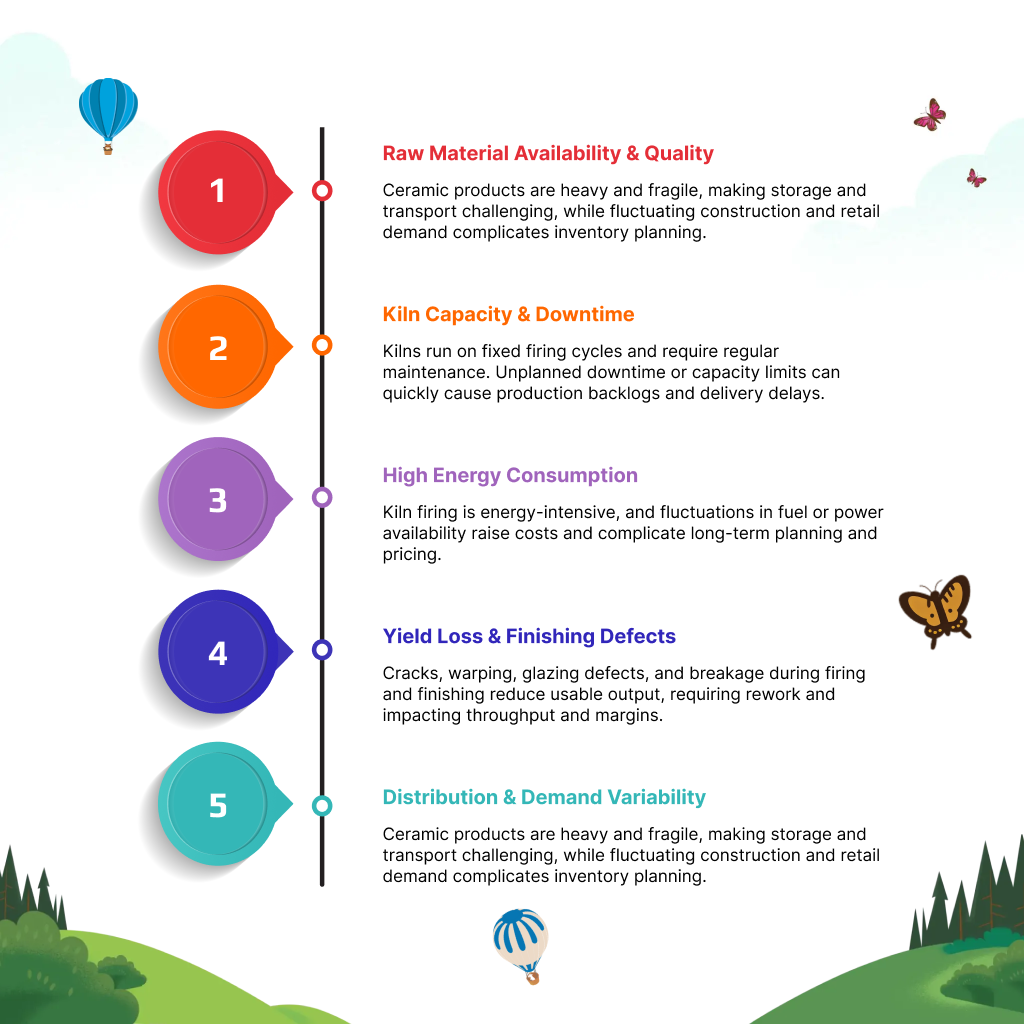
Key Supply Chain Challenges in Ceramics Manufacturing
How Salesforce Manufacturing Cloud Strengthens Ceramics Supply Chains
Case Study: Ceramics Manufacturer Builds a Resilient Supply Chain
The Future of Ceramics Supply Chains
Conclusion
Introduction
Ceramics manufacturing — spanning tiles, sanitaryware, technical ceramics, and advanced industrial components — depends on deep, multi-tier supply chains. From clay and feldspar to glazes, pigments, and packaging materials, supply reliability directly affects kiln schedules and delivery commitments.
According to PwC (2024), nearly 45% of ceramics manufacturers experience production delays due to supply chain disruptions, often caused by poor coordination between sales, procurement, and logistics.
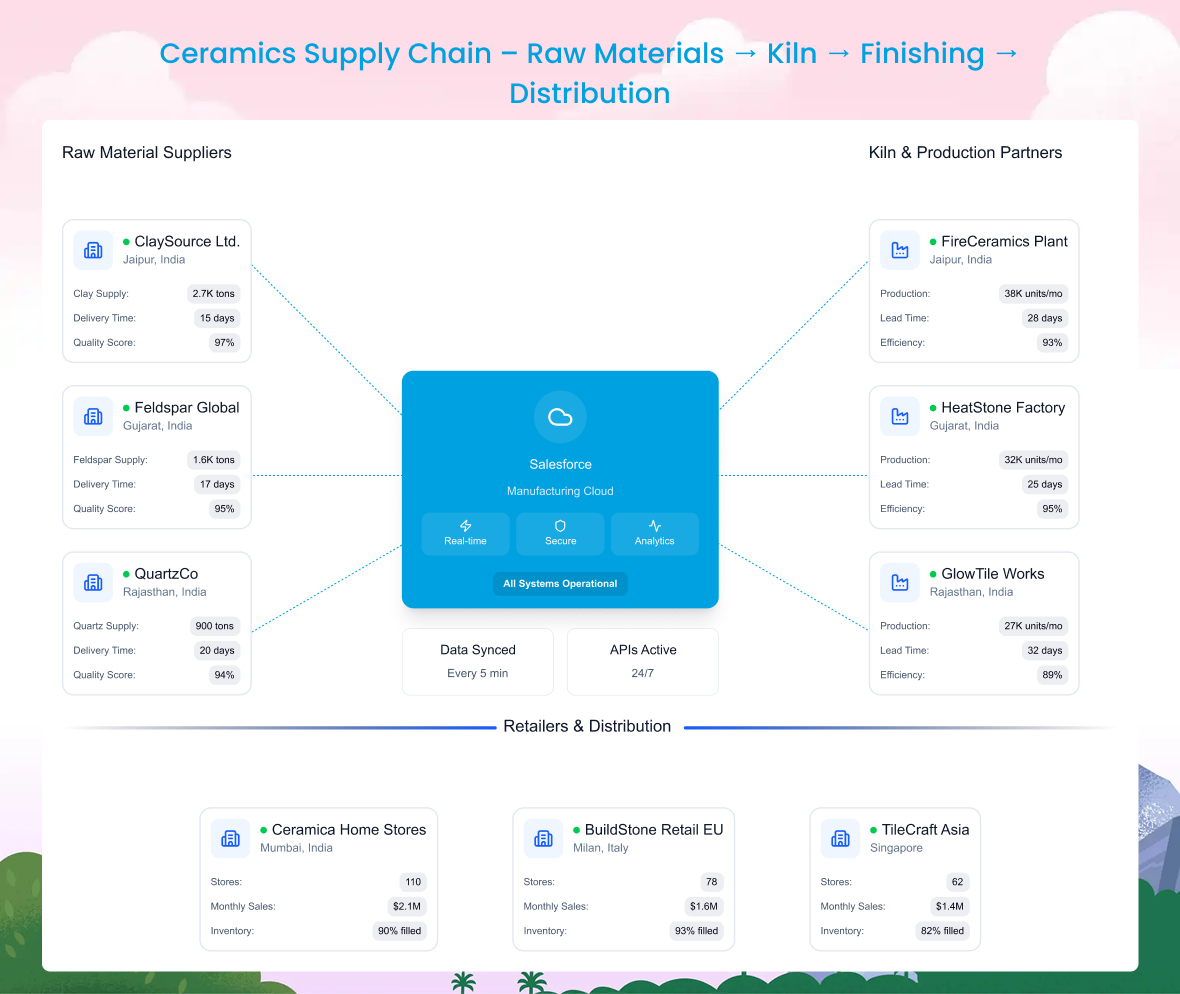
Salesforce Manufacturing Cloud enables ceramics manufacturers to manage this complexity by connecting sales forecasts, supplier planning, distributor collaboration, and AI-driven risk insights in a single platform.
Understanding the Ceramics Manufacturing Supply Chain
Ceramics manufacturing involves multiple interconnected processes that require careful planning and coordination.
Typical supply chain stages include:
- Raw material sourcing (clay, silica, feldspar, additives)
- Production planning
- Forming and shaping
- Drying
- Kiln firing
- Finishing and quality inspection
- Packaging
- Distribution
- Export logistics
Since every stage depends on the previous one, delays in raw materials or logistics can quickly affect production schedules and customer commitments.
Why Supply Chains Are More Complex in the Ceramics Industry
Unlike many manufacturing sectors, ceramics production involves unique operational challenges that require accurate forecasting and real-time coordination.
Fixed Kiln Production Cycles
Kilns operate on scheduled firing cycles that consume significant energy and time. Missing a production window due to material shortages or equipment issues can lead to costly delays.
Diverse Product Portfolios
Manufacturers often produce thousands of tile designs, sanitaryware products, and industrial ceramic components.
Managing numerous SKUs increases planning complexity across procurement, inventory, and production.
Export-Focused Operations
Many ceramics manufacturers serve international markets where shipping delays, customs processes, and distributor coordination directly affect customer satisfaction.
Energy-Dependent Manufacturing
Ceramics production depends heavily on electricity and fuel. Rising energy costs or supply interruptions can significantly impact manufacturing schedules.
Common Supply Chain Challenges in Ceramics Manufacturing
1. Complex Raw Material Procurement
Manufacturers source clay, silica, feldspar, and other materials from multiple suppliers.
Challenges include:
- Supplier delays
- Material quality variations
- Transportation disruptions
- Inventory shortages
2. Limited End-to-End Visibility
Many organizations still manage procurement, sales, inventory, and logistics through disconnected systems.
This creates:
- Poor forecasting
- Delayed decision-making
- Communication gaps
- Inventory imbalances
3. Demand Forecasting Challenges
Changing customer demand and project-based orders make production planning difficult.
Without accurate forecasts, manufacturers often experience:
- Overstocking
- Stock shortages
- Excess inventory costs
- Missed customer commitments
4. Distributor Collaboration Issues
Regional distributors often work independently, limiting visibility into actual customer demand.
As a result:
- Forecast accuracy decreases.
- Inventory planning becomes reactive.
- Delivery timelines become inconsistent.
How Salesforce Manufacturing Cloud Strengthens Ceramics Supply Chains
Salesforce Manufacturing Cloud provides a connected platform that helps manufacturers improve visibility, collaboration, and planning across the supply chain.
Businesses looking to modernize their manufacturing operations can work with a Salesforce Manufacturing Cloud Consulting Partner to customize Manufacturing Cloud for industry-specific planning, demand forecasting, supplier collaboration, and supply chain optimization.
1. Unified Demand & Supply Visibility
- Links customer demand directly with procurement and production plans
- Creates a single source of truth across teams
2. Sales Agreement–Driven Material Planning
- Converts confirmed sales agreements into material demand signals
- Reduces speculative procurement
3. Supplier & Distributor Collaboration Portals
- Suppliers receive forecast visibility
- Distributors share real-time demand updates
4. ERP, MES & Logistics Integration
- Synchronizes Salesforce with ERP and shop-floor systems
- Aligns kiln schedules with inbound material availability
5. AI-Powered Risk & Disruption Prediction
- Einstein AI predicts:
- Supplier delays
- Logistics bottlenecks
- Energy-related production risks
Case Study: Ceramics Manufacturer Builds a Resilient Supply Chain
A leading ceramic tile manufacturer exporting products to 12 countries struggled with raw material shortages and inconsistent delivery performance.
After implementing Salesforce Manufacturing Cloud, the company achieved:
- 30% reduction in supply disruptions
- 22% improvement in inventory planning accuracy
- Better collaboration with distributors
- Improved production planning
- Higher on-time delivery performance
Check out our case study
The Future of Ceramics Supply Chains
- Digital Twin Kilns → Simulating supply-demand alignment
- AI Supplier Risk Scoring → Predicting failures before they occur
- Blockchain Traceability → Raw material provenance assurance
- Energy-Aware Planning → Sustainability-linked production optimization
Conclusion
While this article focuses on ceramics manufacturers, the same Salesforce capabilities can benefit businesses across the Manufacturing Industry. Learn how our Manufacturing Industry Solutions help manufacturers streamline operations, improve forecasting, and build more resilient supply chains.
- End-to-end demand & supply visibility
- Supplier and distributor collaboration
- ERP-aligned production planning
- AI-driven risk mitigation
With Salesforce, ceramics manufacturers transform fragile supply chains into strategic assets.
Ready to strengthen your ceramics supply chain?
Book a Manufacturing Cloud Strategy Session with Perigeon