
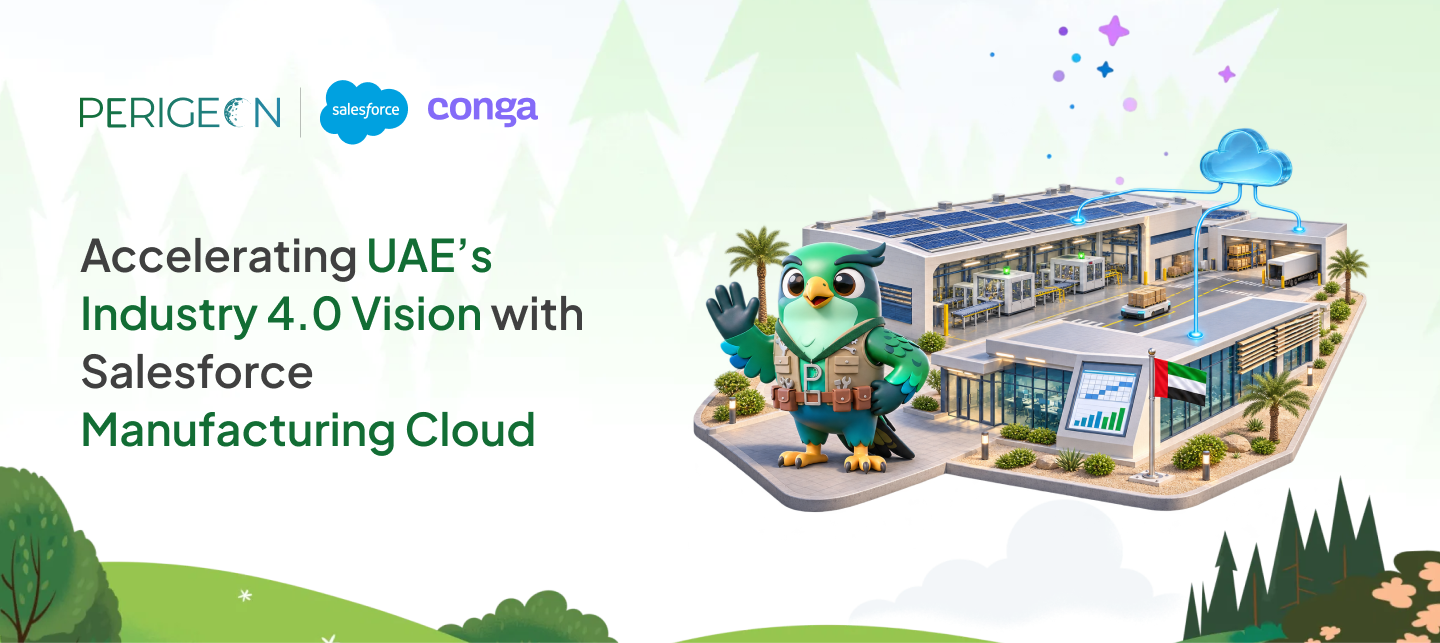
The United Arab Emirates (UAE) is rapidly transforming its manufacturing sector through digital innovation, industrial automation, and smart manufacturing technologies. With initiatives such as UAE Industry 4.0 and Operation 300bn, the country is working towards building a competitive, technology-driven industrial ecosystem.
As manufacturers adopt artificial intelligence (AI), connected systems, robotics, and advanced production technologies, managing business operations through disconnected platforms is becoming increasingly challenging.
Manufacturers need better visibility into customer demand, production requirements, sales commitments, and supply chain activities.
Salesforce Manufacturing Cloud provides a connected CRM platform that helps manufacturers improve demand forecasting, manage sales agreements, strengthen customer relationships, and align commercial planning with operational requirements.
Through Salesforce Manufacturing Cloud implementation services, UAE manufacturers can build a connected business environment that supports Industry 4.0 objectives, operational efficiency, and scalable industrial growth.
Understanding the UAE’s Industry 4.0 Vision
The UAE’s Industry 4.0 initiative focuses on accelerating the adoption of Fourth Industrial Revolution technologies across the industrial sector.
The country’s industrial transformation is supported by initiatives such as Operation 300bn, which aims to increase the industrial sector’s contribution to GDP to AED 300 billion by 2031.
The UAE Industry 4.0 programme also aims to increase industrial productivity by 30% through advanced technology adoption, automation, and digital transformation.
These initiatives encourage manufacturers to embrace:
- Smart manufacturing and connected factory technologies.
- Industrial automation and robotics.
- Artificial intelligence and advanced analytics.
- Digital supply chain management.
- Predictive maintenance and intelligent operations.
- Sustainable production and resource optimization.
However, adopting advanced manufacturing technologies is only one part of digital transformation. Businesses must also connect their commercial and operational processes to achieve better visibility and coordination.
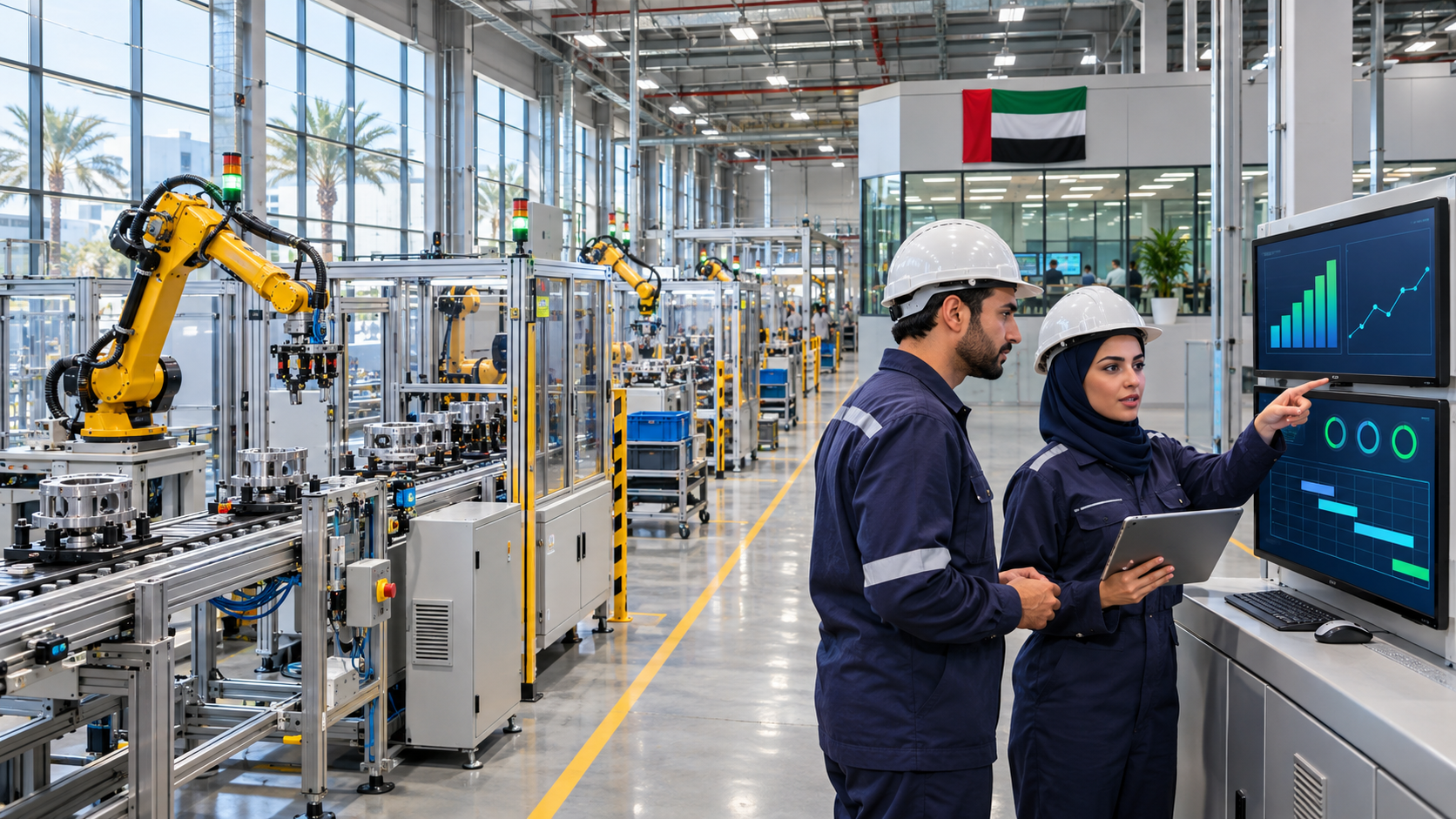
How Salesforce Manufacturing Cloud Supports UAE’s Industry 4.0 Transformation
Salesforce Manufacturing Cloud helps manufacturers connect customer relationships, sales agreements, demand forecasts, and business information through a unified CRM environment.
Here are five ways it can support the UAE’s smart manufacturing ambitions.
1. Connect Sales and Production Planning
One of the biggest challenges in manufacturing is aligning customer demand with production requirements.
When sales forecasts and production planning operate separately, manufacturers may experience inventory imbalances, delayed deliveries, and inefficient resource utilization.
Salesforce Manufacturing Cloud provides account-based forecasting and sales agreement management capabilities that help manufacturers understand customer demand and expected sales volumes.
Businesses can:
- Monitor demand forecasts across customer accounts.
- Track actual sales against planned commitments.
- Identify changes in customer requirements.
- Improve coordination between sales and operations.
- Support better production and inventory planning.
For example, an industrial equipment manufacturer in Abu Dhabi can use account-based forecasts to understand changing customer requirements and coordinate production planning more effectively.
2. Improve Supply Chain Visibility and Partner Collaboration
A connected supply chain is an important component of Industry 4.0.
Manufacturers often work with multiple suppliers, distributors, and logistics partners. When these stakeholders use disconnected systems, sharing accurate business information becomes difficult.
Salesforce Manufacturing Cloud can help centralize customer and commercial information, while Salesforce Experience Cloud can extend relevant information and workflows to external partners through secure portals.
Manufacturers can improve:
- Distributor and supplier communication.
- Sales forecast visibility.
- Customer order coordination.
- Partner relationship management.
- Collaboration across regional distribution networks.
This is particularly valuable for UAE manufacturers managing suppliers and distribution operations across the Middle East and international markets.
3. Integrate ERP and Enterprise Systems
Smart manufacturing depends on connected business systems.
Manufacturers frequently use ERP platforms to manage inventory, procurement, production, and financial operations. However, disconnected ERP and CRM environments can create information gaps between commercial and operational teams.
Through Salesforce Manufacturing Cloud integration and consulting, businesses can plan integrations between Salesforce and ERP platforms such as SAP, Oracle, and Microsoft Dynamics using appropriate integration architecture.
This enables manufacturers to:
- Connect customer and sales information with ERP data.
- Improve visibility into relevant inventory and order information.
- Reduce manual data entry.
- Support coordinated business workflows.
- Improve reporting and management decisions.
For example, a manufacturing company in Dubai can integrate Salesforce with its ERP platform to connect customer commitments with relevant inventory and order information.
These integrations help create a more connected enterprise environment.
4. Automate Business Workflows and Improve Efficiency
Automation is a key component of Industry 4.0, but manufacturers should also consider automation across their business and customer-facing processes.
Salesforce automation capabilities help organizations streamline repetitive CRM activities and improve coordination between departments.
Manufacturers can automate:
- Customer follow-up and sales activities.
- Sales agreement approval workflows.
- Service request and case management.
- Customer communication notifications.
- Business reporting and performance tracking.
For manufacturers with extensive equipment installations, Salesforce Service Cloud solutions and Field Service capabilities can also help coordinate after-sales support, maintenance requests, and technician scheduling.
This creates a more connected customer experience while helping service teams manage operational activities efficiently.
5. Use Analytics and AI for Smarter Business Decisions
Data visibility is essential for manufacturers adopting intelligent business processes.
Salesforce reporting, analytics, and AI capabilities can help organizations understand customer demand, monitor sales performance, and identify business trends.
Manufacturers can use dashboards to monitor:
- Demand forecast accuracy.
- Sales agreement performance.
- Customer order trends.
- Distributor performance.
- Service request volumes.
- Revenue and sales pipeline performance.
With suitable integrations, businesses can also bring operational information into their reporting environment.
For example, a UAE-based manufacturing business can use consolidated sales and customer insights to identify changing market requirements and improve commercial planning.
AI capabilities can further support productivity through appropriate automation and intelligent assistance, depending on the Salesforce products and implementation scope.
Industry 4.0 Applications Across the UAE Manufacturing Sector
The UAE has several priority manufacturing industries where digital transformation and connected business operations can create value.
Automotive and Mobility Manufacturing: Improve dealer relationship management, customer demand forecasting, and coordination across automotive distribution networks.
Aerospace and Advanced Manufacturing: Support long-term customer agreements, sales forecasting, and collaboration across complex business relationships.
Food and Beverage Manufacturing: Improve distributor demand visibility, customer account management, and inventory planning.
Chemical and Petrochemical Manufacturing: Connect customer commitments, commercial forecasts, and supply chain information to support better business planning.
Machinery and Industrial Equipment: Improve sales visibility, customer service coordination, equipment support workflows, and long-term account management.
Salesforce Manufacturing Cloud can be configured around these industry-specific requirements and integrated with existing enterprise platforms.
Why Choose Perigeon for Salesforce Manufacturing Cloud Implementation?
Industry 4.0 transformation requires more than adopting new technology. Manufacturers need a digital strategy that connects their existing business processes, systems, and long-term objectives.
Perigeon helps manufacturing organizations implement and customize Salesforce solutions to improve customer engagement, forecasting, operational visibility, and business efficiency.
Our Salesforce services include:
- Salesforce Manufacturing Cloud Consulting: Assess existing manufacturing processes and develop a Salesforce roadmap aligned with business objectives.
- Salesforce Implementation Services: Configure and deploy Salesforce solutions around specific manufacturing requirements.
- Salesforce Integration Services: Connect ERP platforms and third-party applications to improve data visibility and information exchange.
- Salesforce Customization Services: Develop tailored workflows, automation, and business functionality.
- Manufacturing Cloud Solutions: Configure sales agreements, account-based forecasting, and manufacturing CRM processes.
- Ongoing Support and Optimization: Improve Salesforce performance and adapt the platform as business requirements evolve.
Explore Perigeon’s Salesforce Manufacturing Cloud services to discover how we help manufacturers modernize their business operations.
Conclusion
The UAE’s Industry 4.0 vision is creating new opportunities for manufacturers to modernize their operations, adopt intelligent technologies, and strengthen industrial competitiveness.
Achieving these goals requires more than factory automation. Businesses also need connected CRM and ERP environments, accurate demand forecasting, improved partner collaboration, and data-driven decision-making.
Salesforce Manufacturing Cloud helps manufacturers connect sales agreements, customer demand, forecasting, and business information to create a stronger foundation for digital transformation.
For UAE manufacturers looking to embrace smart manufacturing and prepare for future industrial growth, implementing the right Salesforce solution can be an important step towards building more connected, efficient, and scalable operations.