


Table of content
Introduction
The Importance of Forecasting in CPG Manufacturing
Top Challenges in CPG Demand Forecasting
How Salesforce Manufacturing Cloud Improves Forecast Accuracy
Case Study: Demand Forecast Transformation for a Beverage Brand
The Future of Forecasting in the CPG Industry
Conclusion
Introduction
Consumer Packaged Goods (CPG) manufacturing operates in one of the most volatile and fast-moving markets. Seasonal promotions, social media trends, and economic shifts all impact demand.
A PwC survey (2024) found that CPG companies face 25–35% forecast inaccuracies annually, resulting in either stockouts or excess inventory.
Salesforce Manufacturing Cloud addresses this by combining account-based forecasting, AI-driven insights, and real-time data synchronization, giving manufacturers the visibility and agility needed to plan effectively.
The Importance of Forecasting in CPG Manufacturing
- Efficient Production Planning → Avoid overproduction and reduce waste.
- Improved Service Levels → Ensure products are available when consumers need them.
- Financial Predictability → Stabilize cash flow and working capital.
- Sustainability → Reduce expired or unsold inventory.
Top Challenges in CPG Demand Forecasting
1. Volatile Consumer Demand
- Rapid shifts due to seasonal and cultural trends.
2. Short Product Life Cycles
- Constant launches and reformulations create unpredictability.
3. Channel Fragmentation
- Multiple channels: retail, e-commerce, and direct-to-consumer.
4. Promotion-Driven Spikes
- Trade promotions distort demand visibility.
5. Data Silos & Manual Processes
- Lack of unified data across marketing, sales, and production.
How Salesforce Manufacturing Cloud Improves Forecast Accuracy
1. Account-Based Forecasting
- Forecasts by customer, channel, or region.
- Increases granularity and accountability.
2. Real-Time Demand Signal Integration
- AIntegrates POS and distributor data to reflect live consumption.
3. AI & Predictive Analytics for Demand Planning
- Einstein AI analyzes:
- Historical sales data
- Market sentiment
- Promotion schedules
- Predicts demand fluctuations before they occur.
4. ERP & Supply Chain Synchronization
- Connects Salesforce with ERP and logistics systems.
- Enables real-time adjustments to production schedules.
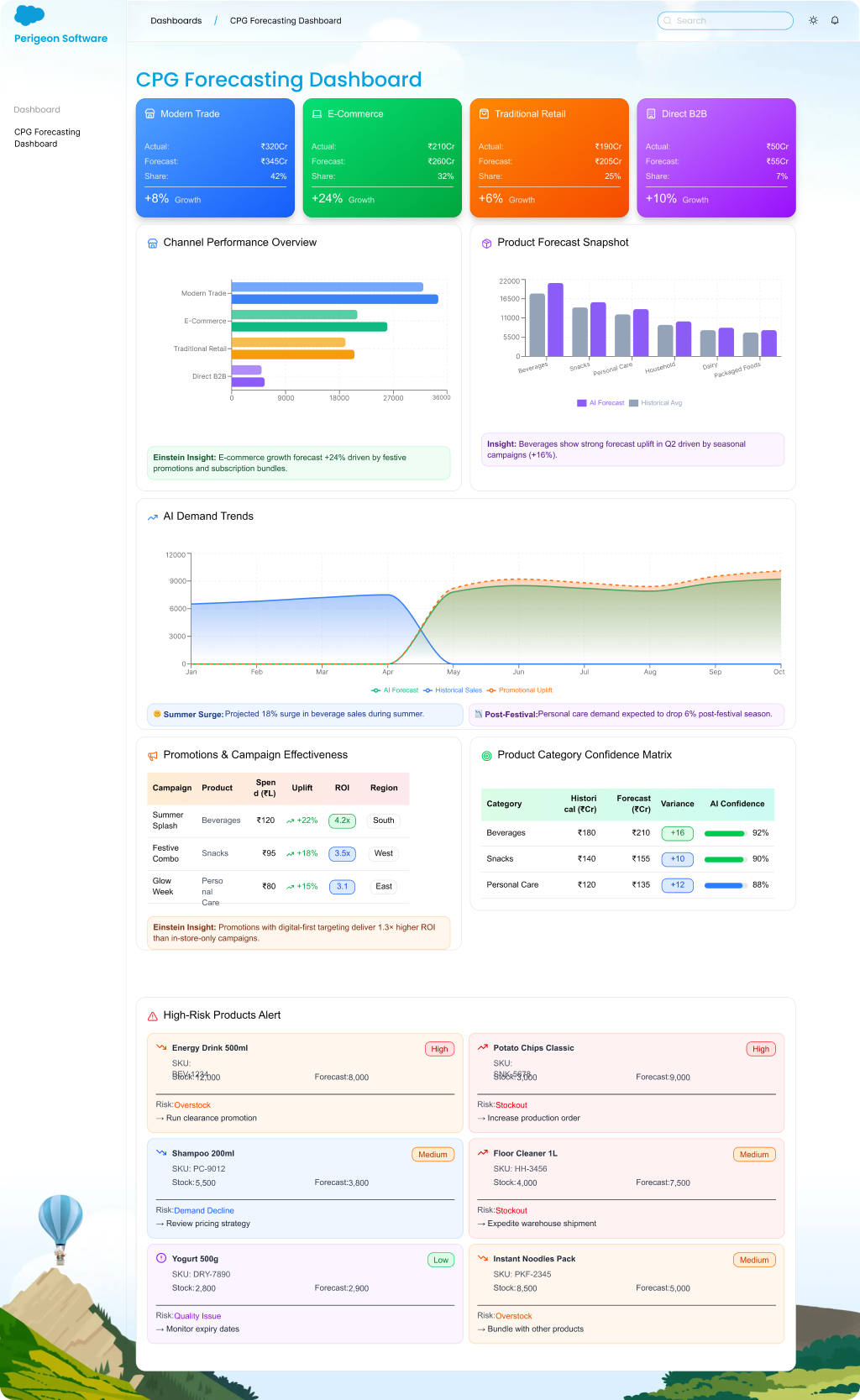
5. Performance Dashboards for Leadership
- Tracks forecast accuracy, service levels, and financial impact.
- Provides actionable insights for planners and executives.
Case Study: Demand Forecast Transformation for a Beverage Brand
A global beverage manufacturer with multi-channel operations faced:
-
- 28% forecast deviation across markets.
- Frequent underproduction during peak seasons.
After Salesforce:
- Forecast accuracy improved to 90%+.
- Wastage reduced by 15%.
- Time to respond to demand changes cut by 40%.
The Future of Forecasting in the CPG Industry
- AI-Driven Scenario Planning → Predicts impact of promotions or external events.
- IoT Data Integration → Real-time sales from connected vending machines and shelves.
- Blockchain Transparency → Verified retail and distributor data exchange.
- Sustainability Forecast Metrics → Measuring eco-efficiency in supply planning.
Conclusion
Accurate forecasting is the cornerstone of efficient, profitable CPG operations. Salesforce Manufacturing Cloud delivers:
- Account-level visibility
- AI-powered forecasting models
- Integrated ERP & supply chain planning
- Real-time retail demand synchronization
With Salesforce, CPG manufacturers achieve predictable growth, lower waste, and superior market responsiveness.
? Ready to master CPG forecasting accuracy?
? [Book a Manufacturing Cloud Strategy Session with Perigeon]