

Table of content
Introduction
Why Dealer & Distributor Collaboration is Critical in Automotive
Challenges in Managing Dealer & Distributor Networks
How Salesforce Manufacturing Cloud Transforms Collaboration
Case Study: Dealer Network Efficiency with Salesforce
The Future of Dealer Collaboration in the Automotive Industry
Conclusion
Introduction
The automotive industry runs on one of the most complex dealer and distributor ecosystems in the world. From large dealer groups in the U.S. to smaller franchise distributors across Asia, aligning these partners with OEM sales strategies and production schedules is mission-critical.
Yet, despite its importance, most manufacturers still struggle with visibility, trust, and collaboration in these networks. According to a 2024 Deloitte survey, 72% of auto dealers cite lack of transparency in incentive programs as their biggest pain point with OEMs.
Salesforce Manufacturing Cloud changes this by giving manufacturers a single platform to share forecasts, track sales agreements, automate rebates, and empower partners with real-time data. The result? Stronger collaboration, fewer disputes, and predictable revenue growth.
Why Dealer & Distributor Collaboration is Critical in Automotive
Dealers and distributors are not just sales channels; they are revenue partners. A well-aligned dealer ecosystem can drive:
- Faster time-to-market for new vehicle models.
- Higher dealer trust and loyalty, reducing churn to competing OEMs.
- Better forecast accuracy, since dealers are closest to customer demand.
- Improved profitability, as rebates and incentives align with real sales.
Without collaboration, OEMs risk production mismatches, strained relationships, and lost market share.
Challenges in Managing Dealer & Distributor Networks
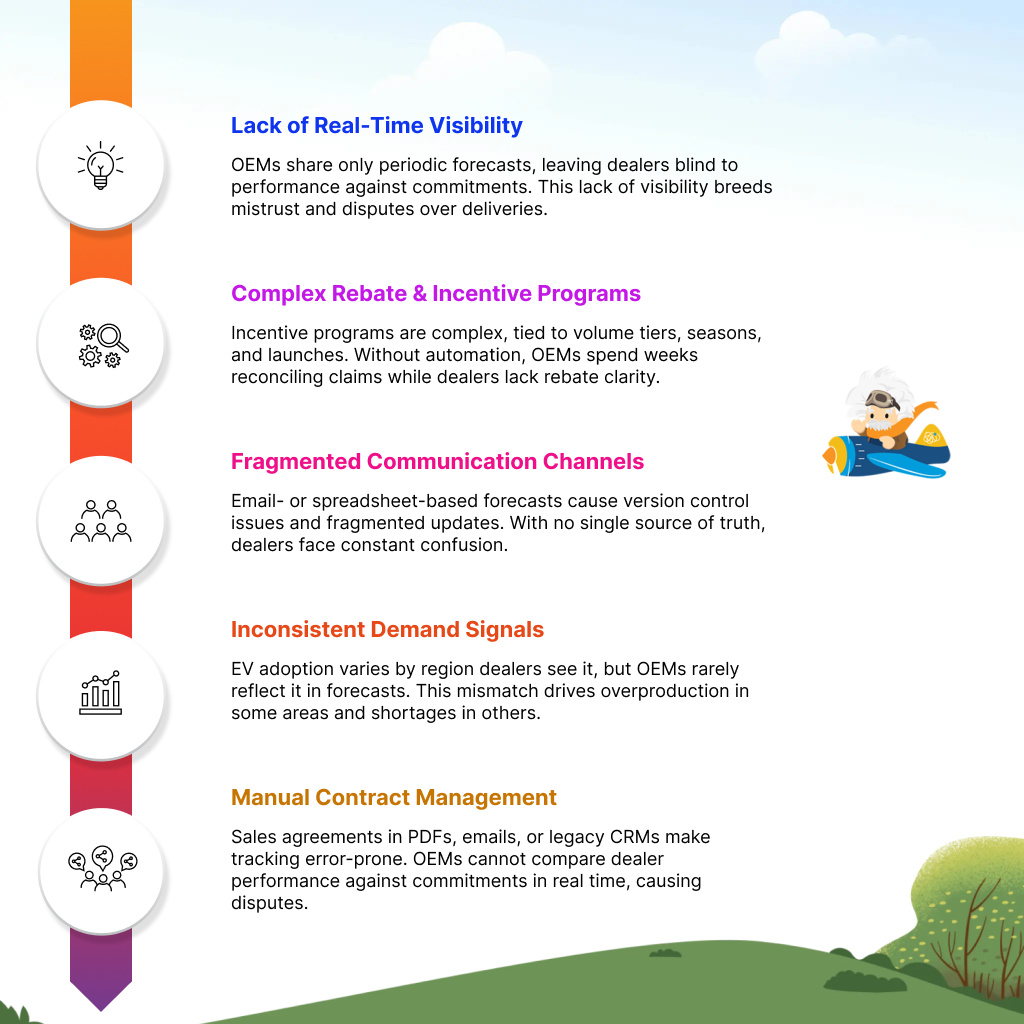
1. Lack of Real-Time Visibility
- OEMs often share quarterly or annual forecasts, leaving dealers in the dark.
- Dealers cannot see how their commitments vs. actuals are performing.
- This results in mistrust and disputes over deliveries.
2. Complex Rebate & Incentive Programs
- Incentives are tied to volume tiers, seasonal campaigns, and market launches.
- Without automation, OEMs spend weeks reconciling rebate claims.
- Dealers lack clarity on how rebates are calculated.
3. Fragmented Communication Channels
- Forecasts sent over email or spreadsheets lead to version control issues.
- Dealers rely on multiple systems for updates.
- No single source of truth creates confusion.
4. Inconsistent Demand Signals
- EV adoption varies regionally (e.g., higher in California vs. Texas).
- Dealers capture these nuances but OEMs rarely integrate them into forecasts.
- The result: overproduction in some regions, underproduction in others.
5. Manual Contract Management
- Sales agreements are managed in PDFs, emails, or legacy CRMs.
- Tracking commitments manually leads to errors and disputes.
- OEMs lack the ability to compare dealer performance vs. agreements in real time.
How Salesforce Manufacturing Cloud Transforms Collaboration
Salesforce Manufacturing Cloud provides end-to-end dealer ecosystem visibility, bridging the gap between OEMs and distributors.
1. Unified Sales Agreements for Transparency
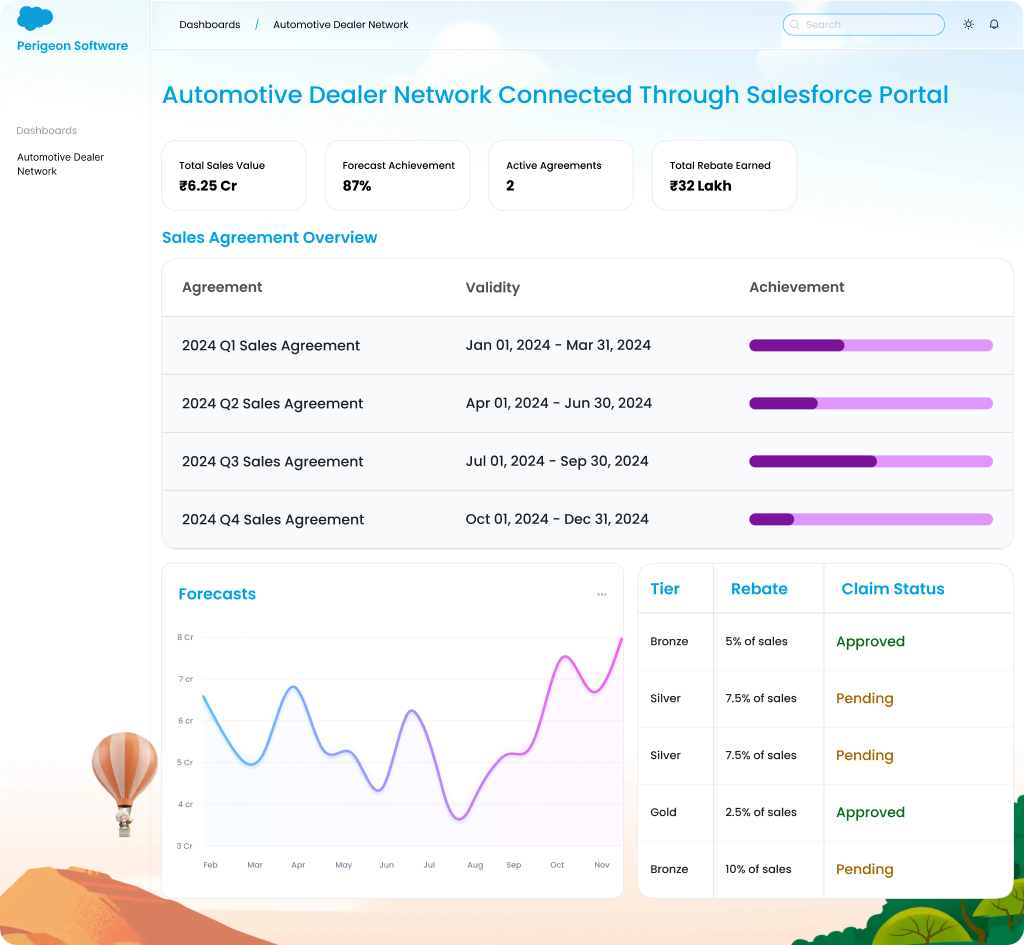
- Store dealer contracts and commitments digitally in Salesforce.
- Both OEMs and dealers see the same real-time view of targets vs. actuals.
- Reduces disputes over order commitments.
? Example: Dealer A’s 12-month EV sales commitment is tracked in real time, with OEM visibility on performance.
2. Real-Time Forecast Sharing with Dealers
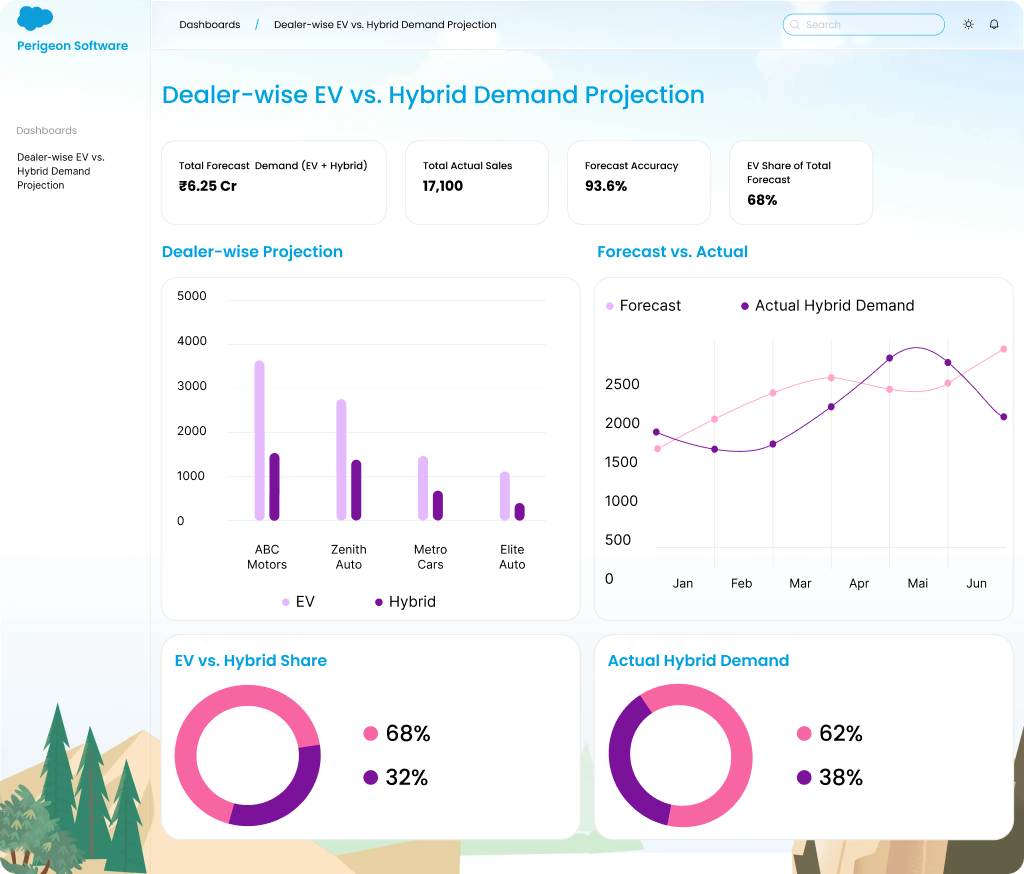
Traditional forecasting looks at aggregated data. Manufacturing Cloud drills down to the account level:
- Forecasts are updated at the account level (dealer-specific).
- Dealers can adjust commitments based on local demand signals.
- Improves forecast accuracy by 20–25% compared to spreadsheets.
3. Automated Rebate & Incentive Management
- Complex volume-based incentives are automated.
- Dealers view rebate progress in real time via dashboards.
- OEMs save weeks of manual reconciliation.
? Statistic: PwC notes that rebate disputes account for 15% of dealer–OEM conflicts annually. With Salesforce, transparent rebate tracking reduces disputes significantly.
4. Self-Service Dealer & Distributor Portals
- Powered by Salesforce Experience Cloud.
- Dealers log in to view:
- Sales agreements
- Incentive progress
- Forecast updates
- Product availability
- Reduces dependency on OEM sales reps for updates.
5. ERP & Supply Chain Integration
- Integrates with ERP systems (SAP, Oracle, Microsoft).
- Dealer demand is directly fed into production schedules.
- Finance teams align cash flow planning with real-time dealer commitments.
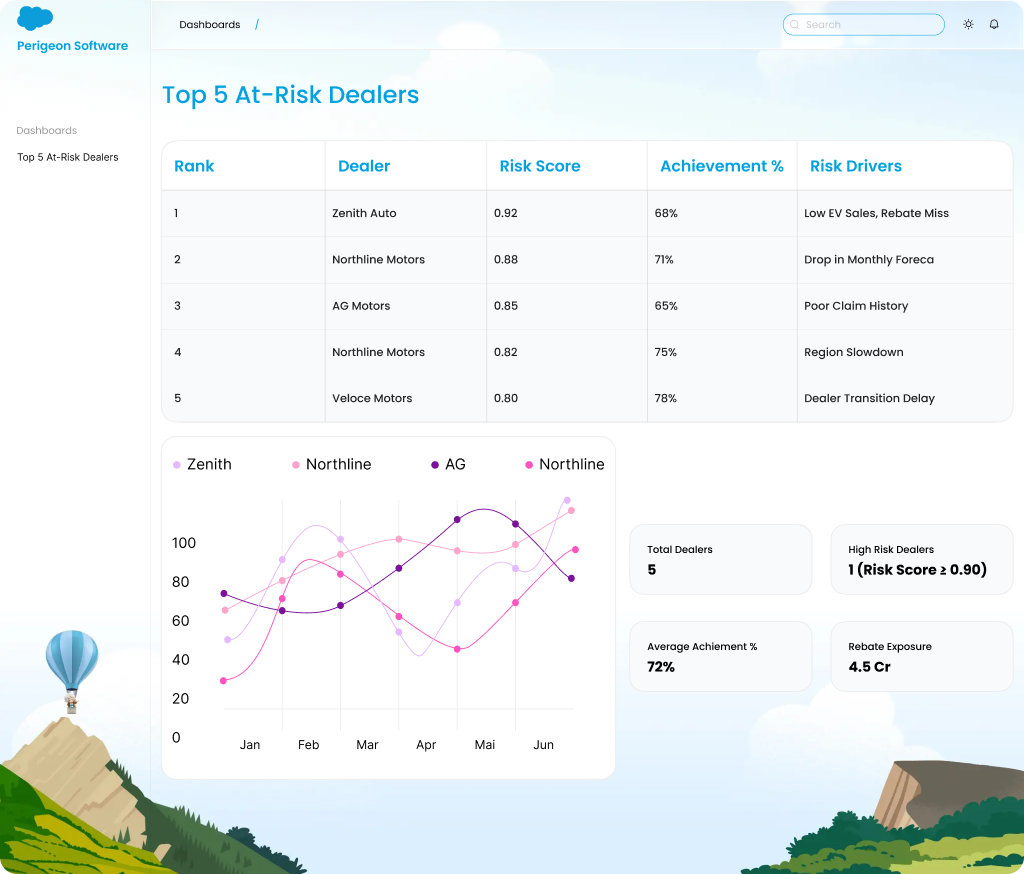
6. AI-Powered Insights into Dealer Performance
AI-driven insights transform decision-making:
- AI predicts which dealers are at risk of missing commitments.
- OEMs can proactively offer incentives or marketing support.
- Identifies high-performing dealers for best-practice sharing.
Case Study: Dealer Network Efficiency with Salesforce
A North American automotive OEM faced:
-
- Forecast deviations of 28% across its dealer network.
- Frequent rebate disputes consuming 200+ hours monthly.
After adopting Salesforce Manufacturing Cloud:
- Forecast deviation dropped to 9% in the first year.
- Rebate disputes fell by 70%, improving dealer trust.
- Dealer satisfaction (measured via surveys) improved by 25%.
The Future of Dealer Collaboration in the Automotive Industry
Looking ahead, OEM–dealer collaboration will evolve with:
- Predictive AI: Adjusting dealer commitments based on real-time demand.
- IoT Integration: Connected cars feeding data into forecasts.
- Sustainability Dashboards: Dealers tracking EV adoption and ESG compliance.
- Blockchain Contracts: Ensuring transparent and tamper-proof dealer agreements.
According to McKinsey, collaborative ecosystems could add $1.5 trillion to global automotive value chains by 2030 — Salesforce is laying the foundation for this future.
Conclusion
Dealer and distributor collaboration is no longer optional — it is the lifeline of predictable revenue in automotive. Salesforce Manufacturing Cloud delivers:
- Transparency through unified sales agreements
- Accuracy with account-based forecasts
- Efficiency by automating rebate programs
- Trust via dealer self-service portals
- Growth through AI-powered insights
For OEMs looking to improve dealer relationships, Manufacturing Cloud is the catalyst for trust, efficiency, and sustainable competitiveness.
? Ready to transform dealer collaboration in your automotive business?
? [Book a Manufacturing Cloud Strategy Session with Perigeon]